
Which version are you in? Look at the menu on the left. If you see Loans with a New label, follow the first set of steps. If your leases sit inside your assets, follow the second set.
In Loans (new)
In Loans, you remove an asset from the loan itself. The loan keeps running, and you do not need to rebuild it.
To remove an asset from a loan:
- Open the loan from the Loans screen and go to the Assets tab.
- Select Remove next to the asset.
- Check the date in the confirmation message, then confirm.
The asset is removed from the loan's commencement date. If the loan has been refinanced, it is removed from the date of the last refinance. To remove it from an earlier date, reverse the refinance first.
After you remove the asset:
- The asset stays in the loan's list of assets, marked Removed, with the date it was removed.
- Its share of the amount financed goes back to Unallocated Amount Financed. If other assets remain on the loan, select Edit Allocations to split it between them.
- The asset itself stays in your register and keeps depreciating as before.
If you are removing an asset because it was sold during the loan and its share was paid out, see One loan for several assets.
Loans is new and we are still adding to it. Bulk actions for loans are not available yet. See What is coming next in Loans.
In the current version
Sometimes you may have accidentally added a lease to an asset, or have another reason why you need to remove a lease you had previously added to an asset in AssetAccountant.
The best way to deal with this is to use the 'Remove Lease' function in the Actions menu in each of the individual leases.
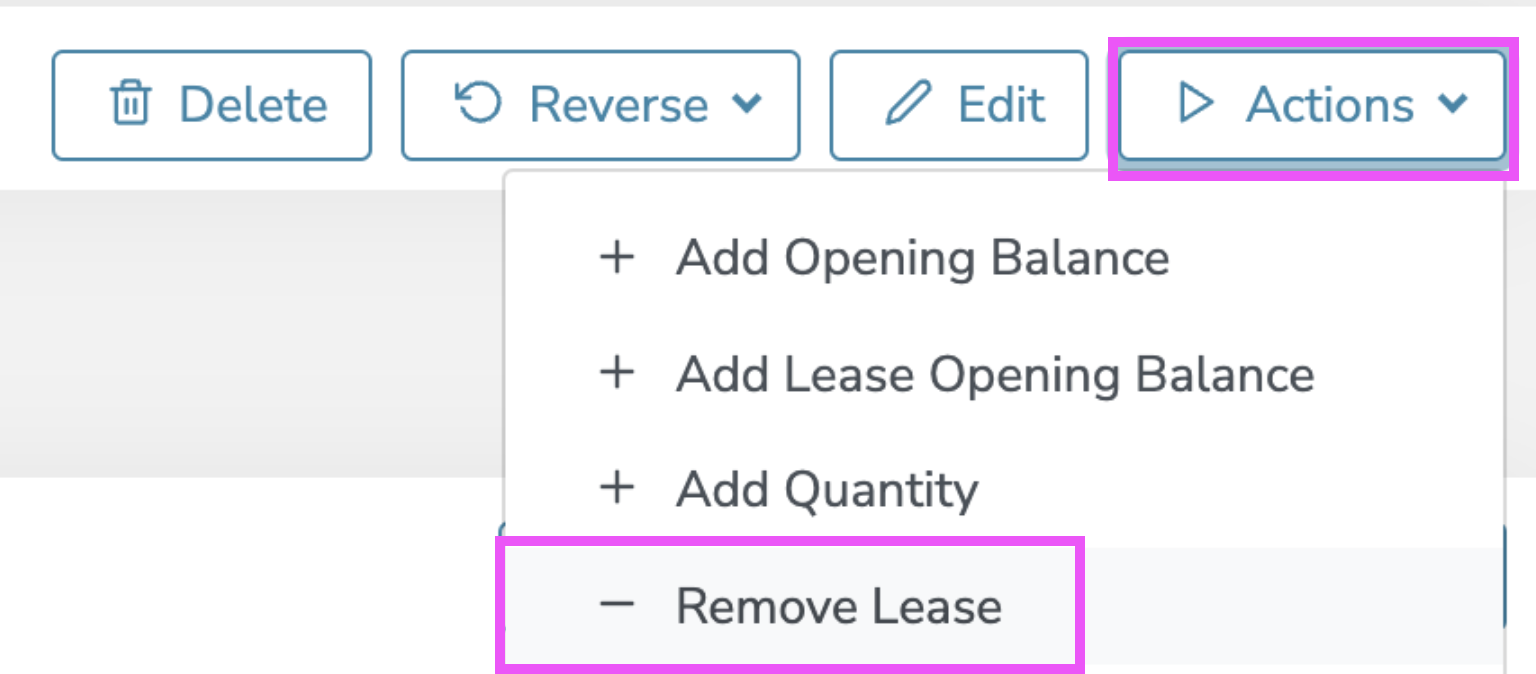
Please note: Removing leases from existing assets may create some journal movements to take account of the removal, assuming that you have created some lease-related journals previously.
Depreciation will continue to be calculated as normal for the underlying assets.
If you don't want these assets to be depreciated, you will need to delete them.
Again, deleting assets is generally not recommended because this action may result in some unanticipated adjusting journal movements if you've created past journals.